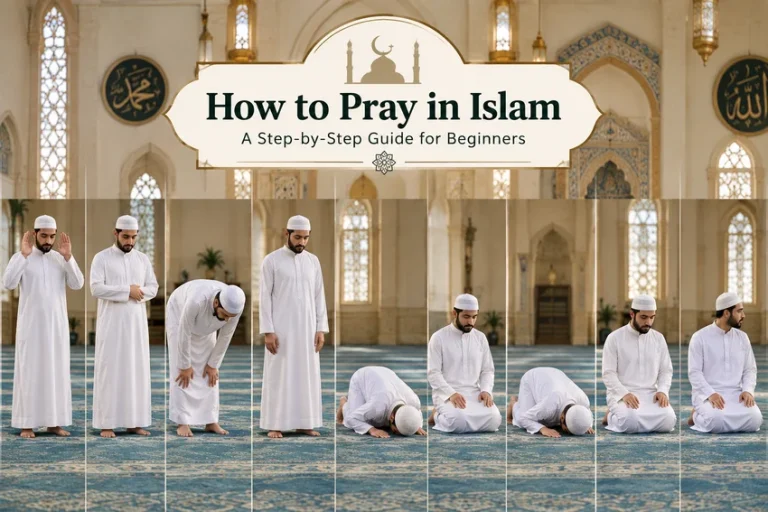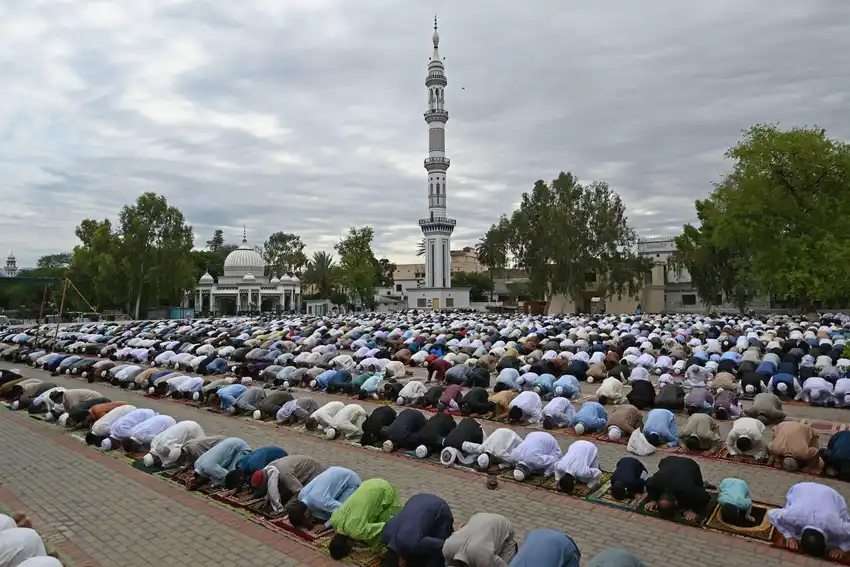
Eid prayer (Eid Salah) consists of two Rak’ahs with additional Takbirs (Allahu Akbar). To perform Eid Salah, make your intention, begin with the opening Takbir, complete the additional Eid Takbirs and two Rak’ahs, and end with Salam. The prayer is performed on both Eid al-Fitr and Eid al-Adha. The number and placement of additional Takbirs differ among Islamic schools of jurisprudence.
Step-by-Step Instructions
The Hanafi method includes three additional Takbirs in each Rak’ah. The following instructions explain how to perform Eid Salah behind an Imam.
Step 1: Make Niyyah (Intention)
Stand facing the Qiblah and intend in your heart to perform two Rak’ahs of Eid Salah behind the Imam. You do not need to say the intention aloud.
Step 2: Begin With Takbiratul Ihram
Raise your hands and say:
Allahu Akbar (الله أكبر) — Allah is the Greatest.
Fold your hands in the standing prayer position and recite the opening supplication (Thana).
Step 3: Say Three Additional Takbirs
In the first Rak’ah, follow the Imam:
- Raise your hands, say Allahu Akbar, and lower them.
- Repeat the second Takbir, lowering your hands afterward.
- Say the third Takbir and fold your hands.
These three Takbirs are additional to the opening Takbir.
Step 4: Listen to the Quran Recitation
The Imam recites Surah Al-Fatihah followed by another Surah or verses from the Quran.
According to Hanafi practice, followers listen attentively rather than reciting behind the Imam.
Step 5: Complete the First Rak’ah
Follow the Imam through the regular prayer movements:
- Perform Ruku (bowing).
- Rise into I’tidal (standing upright).
- Perform the first Sujood (prostration).
- Sit briefly between the two prostrations.
- Perform the second Sujood.
Stand for the second Rak’ah.
Step 6: Begin the Second Rak’ah
The Imam recites Surah Al-Fatihah and another portion of the Quran.
In the Hanafi method, the additional Takbirs in the second Rak’ah come after Quran recitation.
Step 7: Say Three Additional Takbirs
Follow the Imam:
- Raise your hands, say Allahu Akbar, and lower them.
- Repeat the second additional Takbir.
- Repeat the third additional Takbir.
- Say another Allahu Akbar and move into Ruku.
The fourth Takbir is the regular Takbir for entering Ruku, not an additional Eid Takbir.
Step 8: Complete the Second Rak’ah
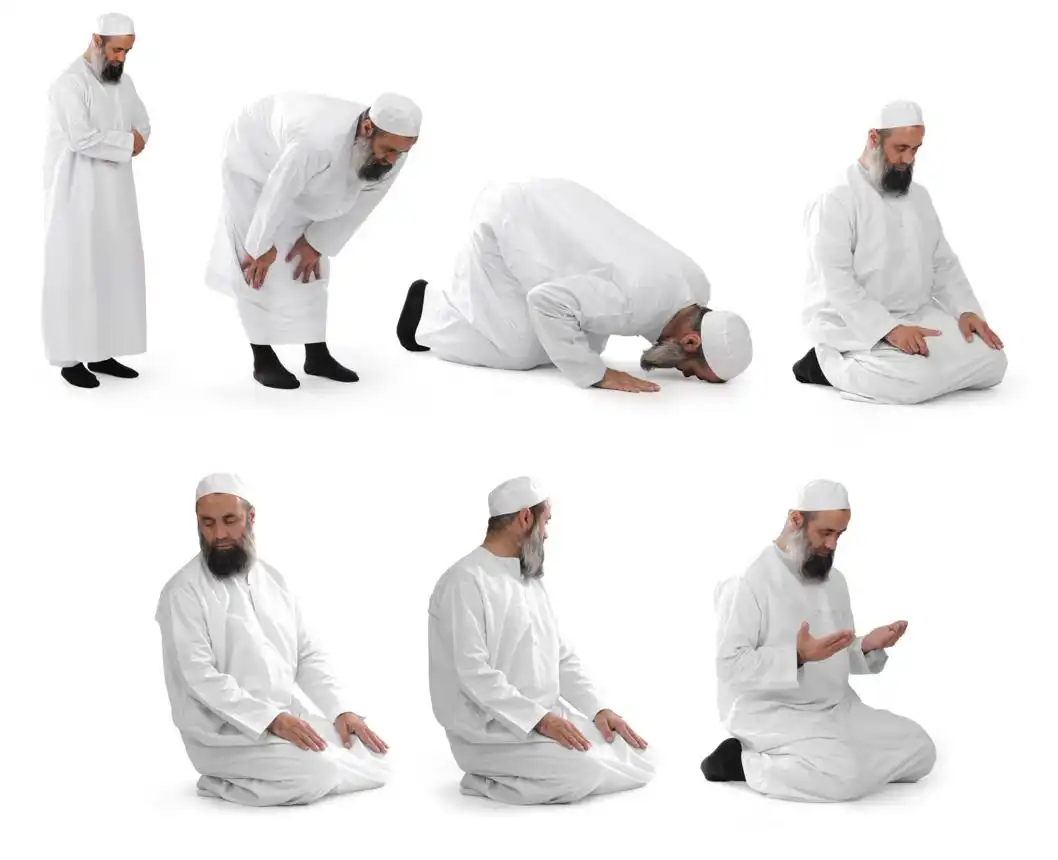
Perform Ruku, stand upright, and complete two Sujoods.
Then sit and recite Tashahhud, Salawat, and the concluding supplication according to your prayer practice.
End the prayer with Tasleem (Salam).
Step 9: Listen to the Eid Khutbah
After the congregational Eid prayer, the Imam delivers the Eid sermon (Khutbah).
Unlike Friday prayer, where the sermon comes before Salah, the Eid Khutbah follows the prayer.
This order is established in Sahih al-Bukhari 960.
How Many Takbeers Are There in Eid Prayer?
The number of additional Takbirs varies among the four major Sunni schools of Islamic jurisprudence.
| Islamic School | First Rak’ah | Second Rak’ah |
|---|---|---|
| Hanafi | 3 additional Takbirs | 3 additional Takbirs |
| Shafi’i | 7 additional Takbirs | 5 additional Takbirs |
| Maliki | 6 additional Takbirs | 5 additional Takbirs |
| Hanbali | 6 additional Takbirs | 5 additional Takbirs |
These figures exclude the opening and transitional Takbirs. Their placement also differs between schools.
A narration from Aisha describes seven Takbirs in the first Rak’ah and five in the second, apart from the Takbirs associated with Ruku. See Sunan Abi Dawud 1149.
These differences reflect recognized scholarly interpretations. When praying in congregation, follow your Imam rather than mixing different methods.
What to Do Before Eid Prayer
Before attending Eid Salah, prepare as you would for regular Islamic prayer.
- Perform Wudu: Ensure ritual purity.
- Wear appropriate clothing: Cover the required Awrah and wear clean clothes.
- Check the prayer time: Confirm your mosque’s Eid Salah schedule.
- Face the Qiblah: Turn toward the Ka’bah in Makkah.
- Make Niyyah: Intend to perform two Rak’ahs of Eid Salah.
- Join the congregation: Follow the Imam at the mosque or Eidgah.
Taking Ghusl (a ritual bath) and wearing suitable clean clothing are also recommended Eid-day practices.
How Many Rak’ahs Are in Eid Prayer?
Both Eid al-Fitr and Eid al-Adha prayers consist of two Rak’ahs.
| Feature | Eid Prayer |
|---|---|
| Number of Rak’ahs | 2 |
| Additional Takbirs | Yes, according to the school followed |
| Adhan | Not prescribed |
| Iqamah | Not prescribed |
| Khutbah | After the congregational prayer |
| Prayer time | Morning, after sunrise and before solar noon |
Ibn Abbas reported that Prophet Muhammad ﷺ performed two Rak’ahs on Eid without offering additional prayer immediately before or after them.
Source: Sahih al-Bukhari 964.
What Is Eid Prayer in Islam?
Eid Salah is a special Islamic prayer performed on the two major Muslim festivals:
- Eid al-Fitr: Celebrated on 1 Shawwal, marking the end of Ramadan.
- Eid al-Adha: Celebrated on 10 Dhul Hijjah, during the Hajj season.
Prophet Muhammad ﷺ performed Eid prayer with the Muslim community, followed by a sermon.
Unlike the five daily prayers, Eid Salah includes additional Takbirs and is performed without an Adhan or Iqamah.
Is Eid al-Fitr Prayer Different From Eid al-Adha Prayer?
The basic prayer procedure is the same for Eid al-Fitr and Eid al-Adha. Both consist of two Rak’ahs with additional Takbirs according to the school of jurisprudence followed.
| Eid al-Fitr | Eid al-Adha |
|---|---|
| Celebrated on 1 Shawwal | Celebrated on 10 Dhul Hijjah |
| Marks the end of Ramadan | Occurs during Hajj |
| Associated with Zakat al-Fitr | Associated with Qurbani (Udhiyah) |
| Two Rak’ahs of Eid Salah | Two Rak’ahs of Eid Salah |
Muslims learning how to pray Eid al-Adha prayer or Eid ul-Fitr prayer can follow the same recognized school-specific method.
Is Eid Prayer Mandatory in Islam?
Islamic scholars differ regarding the legal status of Eid Salah.
| Islamic School | Ruling |
|---|---|
| Hanafi | Wajib (obligatory for those meeting its conditions) |
| Shafi’i | Sunnah Mu’akkadah (highly emphasized Sunnah) |
| Maliki | Sunnah Mu’akkadah |
| Hanbali | Fard Kifayah (communal obligation), according to the commonly cited school position |
The obligation to attend and the conditions for performing Eid Salah depend on the relevant jurisprudential rulings.
Follow guidance from a qualified Islamic scholar or your school of jurisprudence.
Can You Pray Eid Prayer at Home?
Whether Eid Salah can be performed at home depends on the Islamic school of jurisprudence and individual circumstances.
Hanafi school: Eid Salah requires specific congregational conditions. An individual praying alone at home does not fulfill the prescribed Eid prayer.
Shafi’i school: Eid Salah may be performed individually, including at home, according to the school’s rulings.
Other schools also have specific conditions regarding congregation and individual prayer.
Therefore, if you want to pray Eid al-Adha at home alone, follow reliable guidance appropriate to your school rather than assuming one method applies universally.
How Do Women Perform Eid Prayer?
Women follow the same basic two-Rak’ah Eid Salah structure as men, including the additional Takbirs according to their school of jurisprudence.
Women may attend Eid prayer at a mosque or Eidgah while observing appropriate Islamic clothing and congregational arrangements.
Umm Atiyyah reported that women were instructed to attend Eid gatherings, including menstruating women, who remained apart from the prayer itself.
Source: Sahih al-Bukhari 971.
Women who wish to perform Eid prayer at home should follow the applicable school-specific rulings concerning individual prayer.
For more guidance read: How to Pray in Islam for Women.
When Is Eid Prayer Performed?
Eid Salah is performed in the morning, after the sun has risen sufficiently above the horizon and before solar noon (Zawal).
It is not performed at the moment of sunrise or when the sun reaches its zenith.
The exact congregational time varies by location and mosque. Check your local mosque’s Eid announcement before attending.
Visit the Al Minhal Academy Masjid page for information about the masjid.
Common Mistakes to Avoid During Eid Prayer
- Confusing additional Takbirs: Distinguish Eid Takbirs from the opening and movement Takbirs.
- Mixing different methods: Follow one recognized jurisprudential method.
- Not following the Imam: Pay attention to the Imam’s movements and Takbirs.
- Confusing Khutbah order: Eid Khutbah follows the prayer, unlike Jumu’ah.
- Assuming home prayer is universally permitted: Rulings differ among Islamic schools.
- Not knowing what to do when arriving late: Ask your Imam about missed Takbirs or Rak’ahs.
Published by: Al Minhal Academy
Written by: Abdul Hadi
Sources: Sahih al-Bukhari, Sahih Muslim, Sunan Abi Dawud, and verified school-specific jurisprudential references