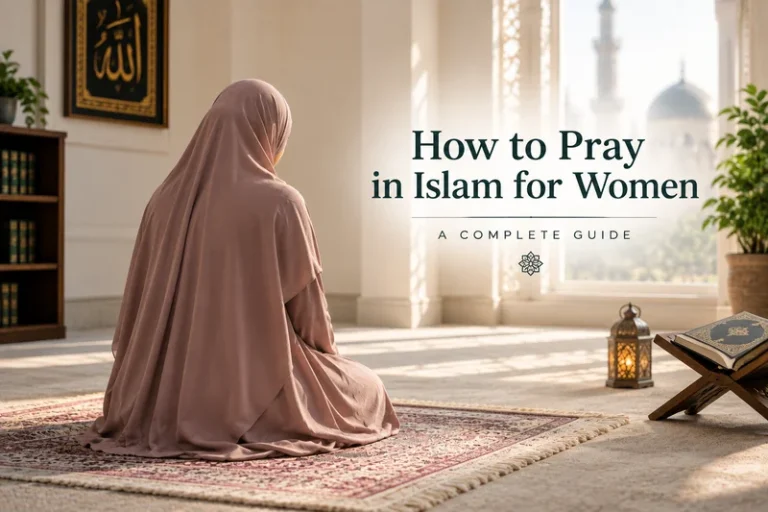
Salah (prayer) is one of the Five Pillars of Islam and a central act of worship for Muslims. Muslims perform five obligatory prayers each day: Fajr, Dhuhr, Asr, Maghrib, and Isha.
If you are learning how to pray in Islam, this guide explains the basic requirements, prayer movements, essential recitations, and number of rak’ahs in a simple step-by-step format.
What Is Salah in Islam?
Salah is the formal prayer Muslims perform at prescribed times as an act of worship and remembrance of Allah. It includes standing, bowing (Ruku), prostration (Sujood), sitting, Quran recitation, and supplication.
The five obligatory daily prayers are:
| Prayer | Obligatory Rak’ahs |
|---|---|
| Fajr | 2 |
| Dhuhr | 4 |
| Asr | 4 |
| Maghrib | 3 |
| Isha | 4 |
Additional Sunnah prayers and Witr are also part of Muslim worship, with details varying according to school of Islamic jurisprudence.
What Is Required Before Salah?
Before beginning prayer, a Muslim should ensure the basic conditions of Salah are fulfilled:
- Wudu: Perform ritual purification when required.
- Cleanliness: The body, clothing, and place of prayer should be clean.
- Awrah: Cover the parts of the body that must be covered during prayer.
- Prayer time: Pray after the prescribed time has entered.
- Qiblah: Face the Ka’bah in Makkah.
- Niyyah: Have the intention to perform the particular prayer.
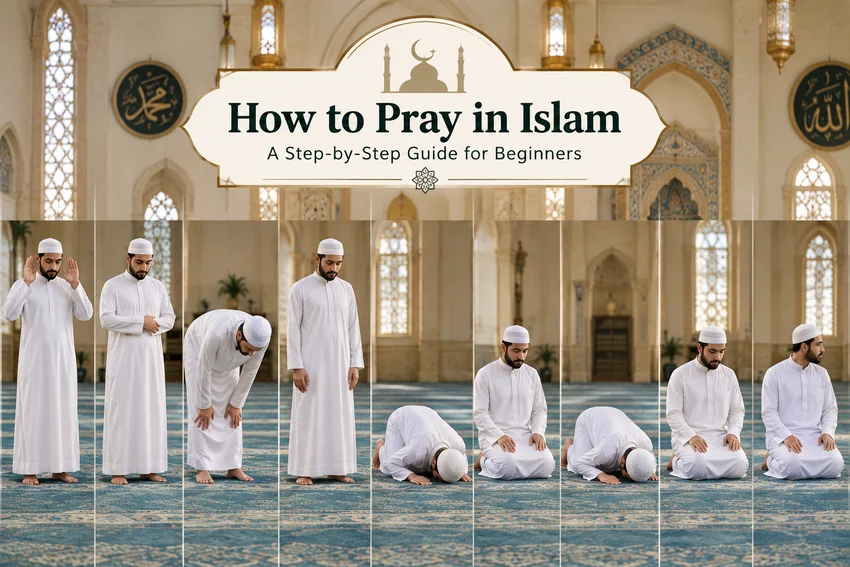
How to Pray in Islam Step by Step
The following describes the basic structure of Salah. Details can differ between Islamic schools of jurisprudence.
1. Make the Intention
Make the intention (Niyyah) in your heart for the prayer you are about to perform.
2. Face the Qiblah
Stand facing the Qiblah, the direction of the Ka’bah in Makkah.
3. Begin With Takbir
Raise your hands according to the established practice you follow and say:
Allahu Akbar
Allah is the Greatest.
This begins the prayer.
4. Recite the Opening Supplication
Recite the opening supplication (Thana), according to the practice you follow.
5. Recite Surah Al-Fatihah
Recite Surah Al-Fatihah, which is an essential part of Salah according to the majority of scholars.
In applicable rak’ahs, follow it with another portion of the Quran.
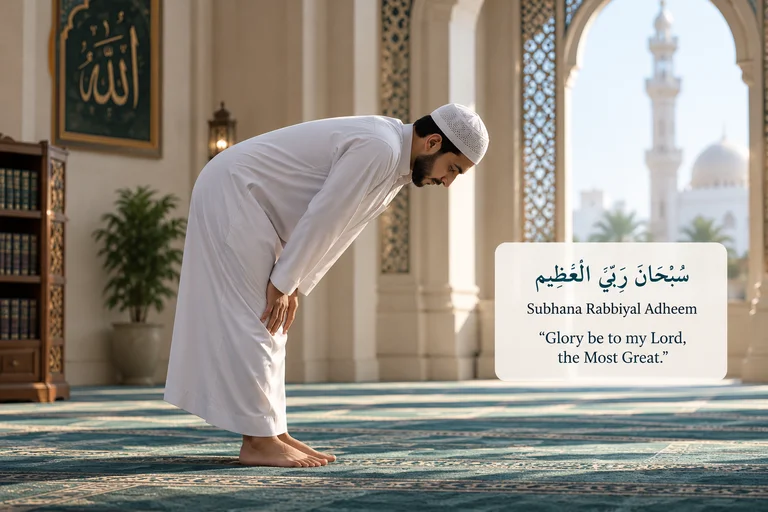
6. Perform Ruku
Say Allahu Akbar and bow.
While in Ruku, glorify Allah. A commonly recited phrase is:
Subhana Rabbiyal Adheem
Glory be to my Lord, the Most Great.
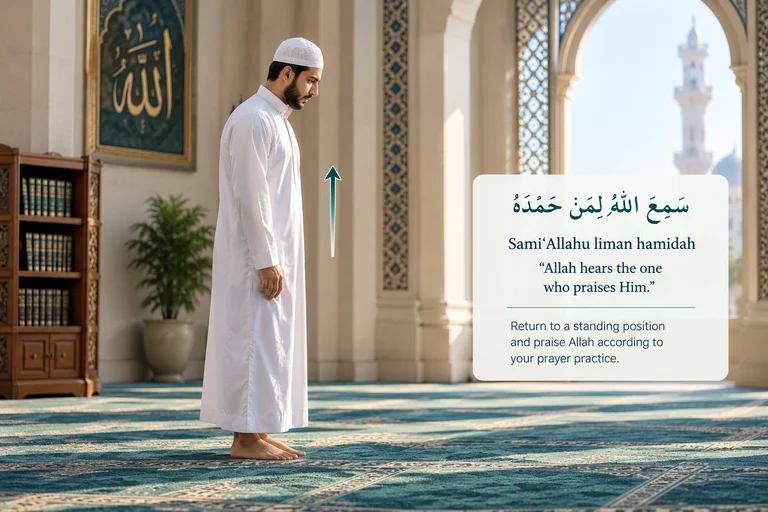
7. Rise From Ruku
Return to a standing position and praise Allah according to the established prayer practice.
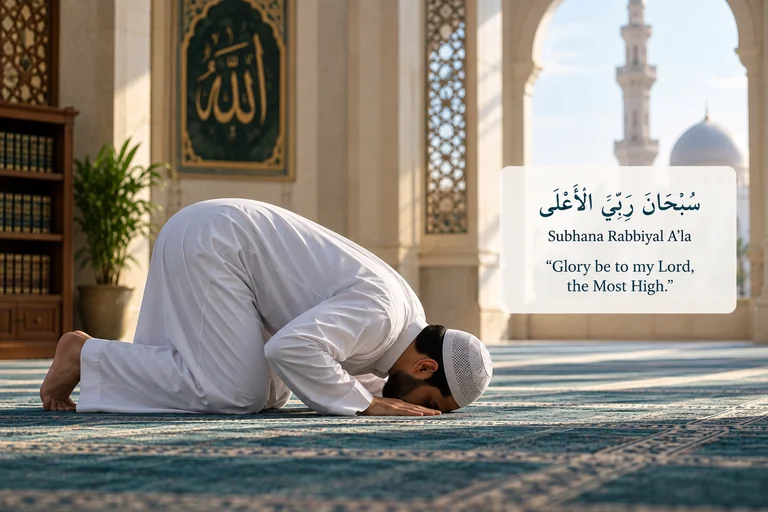
8. Perform Sujood
Say Allahu Akbar and prostrate.
In Sujood, a commonly recited phrase is:
Subhana Rabbiyal A’la
Glory be to my Lord, the Most High.
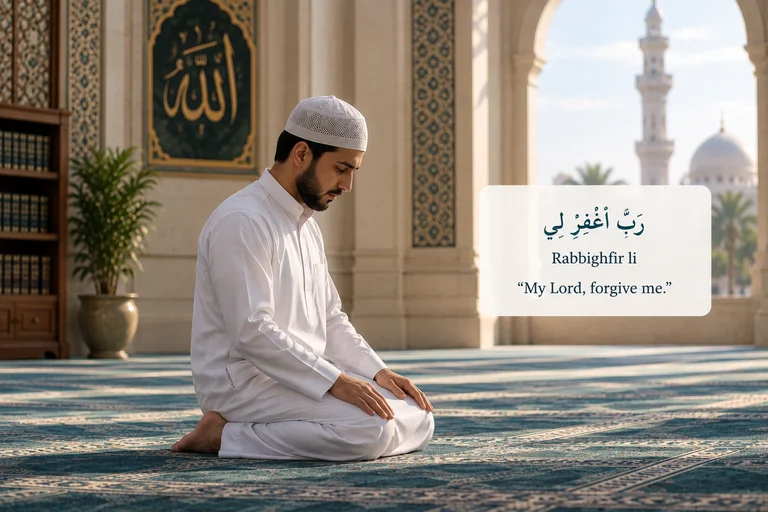
9. Sit Between the Two Prostrations
Rise from the first Sujood and sit briefly before performing the second Sujood.
10. Perform the Second Sujood
Perform the second prostration and recite the appropriate glorification.
This completes one cycle, or rak’ah, of Salah.
11. Continue the Remaining Rak’ahs
Stand for the next rak’ah and repeat the required sequence.
The number of obligatory rak’ahs depends on the prayer:
- Fajr — 2
- Dhuhr — 4
- Asr — 4
- Maghrib — 3
- Isha — 4
12. Recite Tashahhud
After the appropriate rak’ahs, sit and recite Tashahhud.
In the final sitting, the prayer includes Tashahhud and the prescribed blessings upon Prophet Muhammad ﷺ, followed by supplication according to the practice being followed.
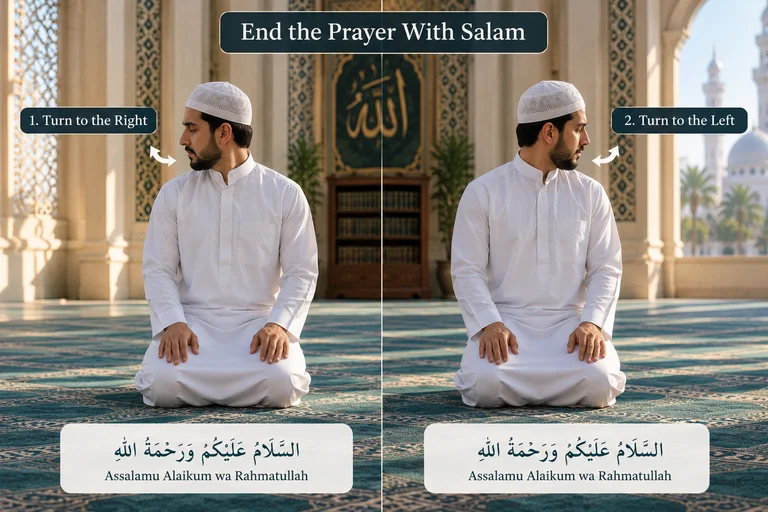
13. End the Prayer With Salam
Turn the head to the right and then to the left, saying:
Assalamu Alaikum wa Rahmatullah
This concludes Salah.
What Do You Recite During Salah?
The main recitations include:
- Takbir: Allahu Akbar
- Surah Al-Fatihah
- Quranic verses or a short Surah where applicable
- Ruku: glorification of Allah
- Sujood: glorification of Allah
- Tashahhud
- Salawat
- Dua
- Salam
Beginners should learn the essential Arabic recitations gradually and understand their meanings.
Common Mistakes Beginners Should Avoid
When learning how to pray in Islam, beginners should pay attention to:
- Learning Wudu correctly
- Praying at the correct time
- Facing the Qiblah
- Learning the required recitations
- Performing Ruku and Sujood correctly
- Avoiding unnecessary rushing
- Maintaining proper prayer posture
- Learning the requirements and invalidators of Salah
If you are unsure about a particular ruling, ask a qualified Islamic teacher because some details differ between schools of jurisprudence.
What Can Invalidate Salah?
Certain actions can invalidate Salah, including some forms of intentionally speaking, eating or drinking during prayer, losing Wudu, and other actions depending on the circumstances and school of jurisprudence.
Can Beginners Learn How to Pray in Islam?
Yes. A beginner can learn Salah step by step. Start by learning:
- Wudu
- The basic prayer positions
- Surah Al-Fatihah
- Essential prayer recitations
- The correct number of rak’ahs
- Tashahhud and the ending of Salah
Regular practice and guidance from a knowledgeable teacher can make learning easier. Women who want to learn about women-specific prayer positions and related Salah questions can also read our complete guide to how to pray in Islam for women.
Learn Salah Step by Step
Learning how to pray in Islam is an important part of a Muslim’s religious life. Start with the basics, practice consistently, learn the meanings of the recitations, and seek guidance from qualified teachers when needed.